Case notes · 4 min read
Working in Live Buildings: How to Be the Crew That Gets Invited Back
Lessons from our completed commercial works in a live London tower — the live-environment rules that keep an occupied building running and earn a crew its next invitation.
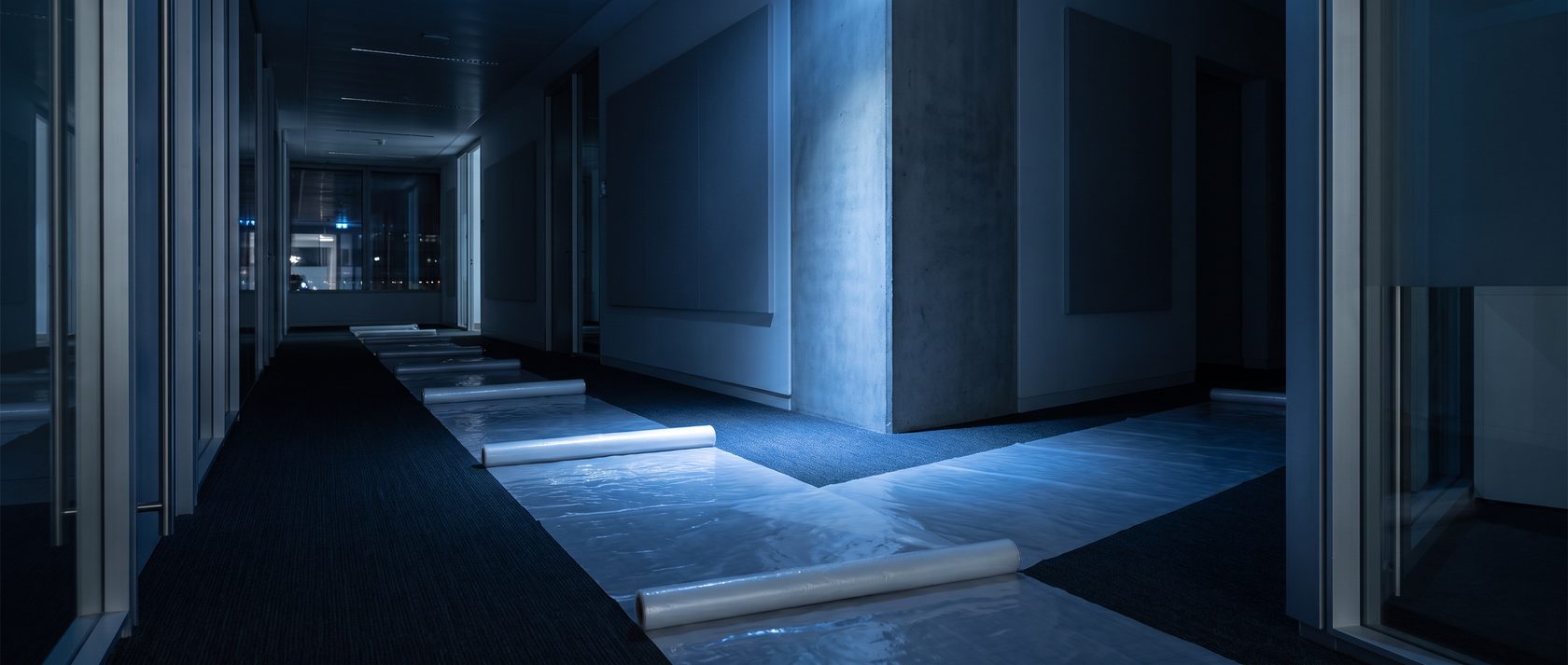
We recently completed commercial works in a live, occupied London office tower. Not shell and core, not an empty floor — a live, occupied, managed building, with tenants working through the day and a building management team whose patience is a finite, carefully spent resource.
Live-environment work is its own trade. The technical scope might be identical to a job on a construction site, but the operating rules are not, and crews that treat an occupied building like a site soon find their access quietly drying up. These are the rules we worked to — and why they are the real reason a building manager invites a crew back.
The out-of-hours window is a contract, not a target
If the agreed window is 22:00 to 06:00, the job is not to work until 06:00 — it is to be finished, cleaned up and gone by 06:00. That means planning every shift backwards from the exit: last fix, make safe, protection checked, waste out, loading bay clear. The productive hours are what remain after you have protected the deadline, not the other way round.
It also means scoping honestly. Booking more work into a window than the window holds is a gamble with someone else's building. Overrun once and you have spent goodwill; overrun twice and the conversation changes from scheduling to whether you should be there at all.
Permits arranged before the day, never on it
Managed estates run tight permit regimes, and rightly so. Permit to work, hot works, riser and roof access, isolations — all of it arranged days ahead and confirmed in writing, because a crew standing at the loading bay waiting for paperwork is burning the exact window it fought to get. Before any shift, we want the following already settled:
None of this is glamorous. All of it is the difference between an eight-hour window and a five-hour one.
- Permits signed and issued, not promised
- Access routes, lift bookings and loading bay slots confirmed
- Isolations agreed with the building engineer in advance
- Contact details for the duty manager and security desk in hand
- Materials delivered and staged, so the window starts with tools rather than logistics
Finished spaces get protected like you are paying for the damage
An occupied commercial floor is a finished product: carpet, joinery, glazed partitions, someone's tidy desk. Protection goes down before tools come out — floor protection along the full route, corner guards on every turn, coverings over anything near the work area.
The maths is not subtle. Protection materials cost pennies against the price of recarpeting a corridor or reglazing a partition, and the reputational cost runs higher still. A scuffed wall in a tenant's office becomes the building manager's problem within the hour — and the building manager makes it yours.
Cleaner than found — daily, not eventually
A final clean at the end of the project is not the standard. Every shift ends with the space handed back tenant-ready, because the tenants arriving at 08:00 are the real inspection. If they can tell a crew was in overnight, something was missed.
We photograph areas as we leave them each night. It protects the client, the building and us — and it enforces the habit, because a standard you evidence daily is a standard you keep.
The best compliment in live-environment work is a tenant who never knew you were there.
Why this is commercial, not cosmetic
Building managers talk to each other, and managed estates keep long memories. A crew that holds its windows, arrives with permits done, protects finishes and leaves the place cleaner than it found it becomes a known quantity: inductions get smoother, access requests get approved faster, and the next scope of works gets offered rather than tendered for.
That is the quiet economics of live-environment work. Repeat access to occupied buildings is not won with brochures. It is won shift by shift, in the state of the corridor at 06:00.
Those works are complete, signed off, and the building carried on around them the entire time — which is exactly how it should read. If you have works coming up in a live building and need a crew the building manager will vouch for afterwards, that is a conversation we are always glad to have. Talk to us about live-environment works
Need a crew that hands over a pack like this?
Tell us the site and the start date. Rates and availability back the same working day.
Not sure what is involved? Check the paperwork and lead time first →